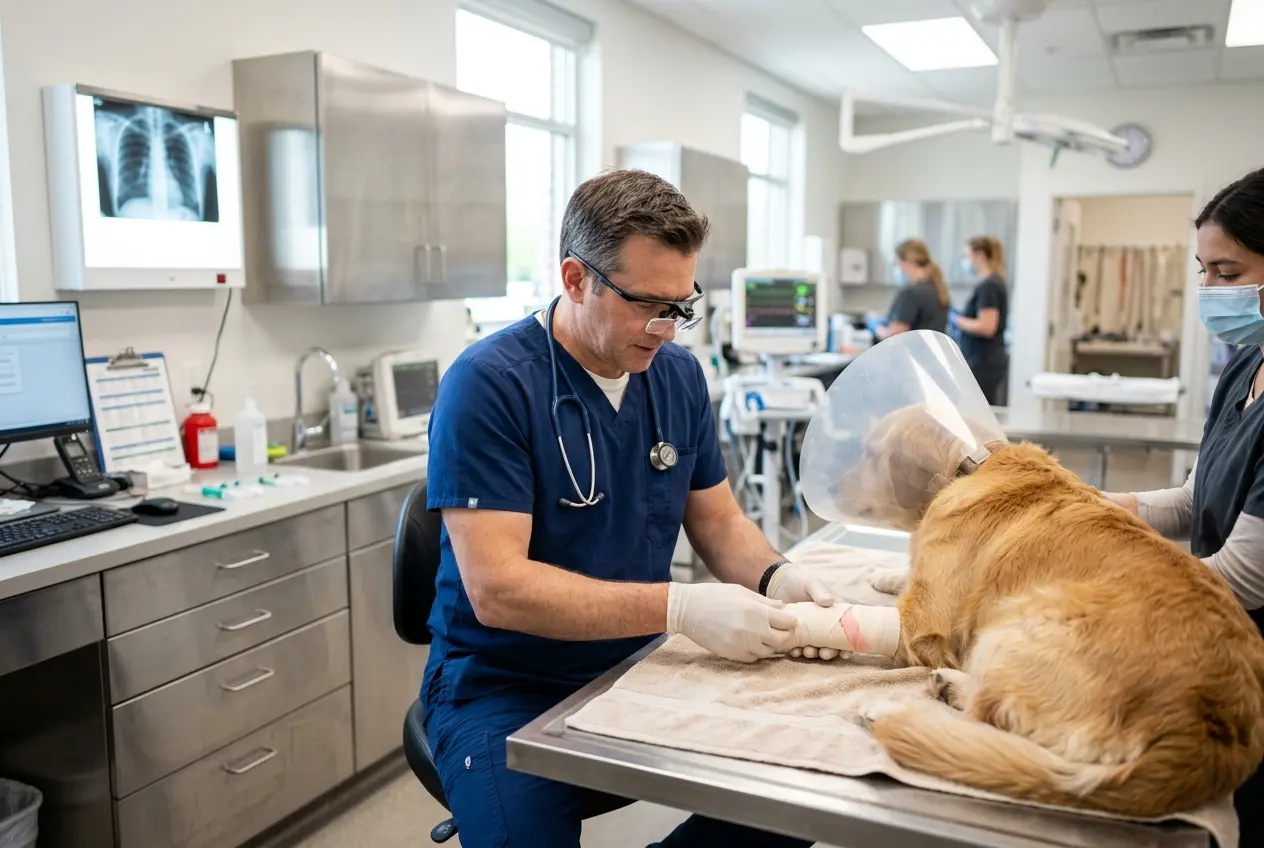
When Asheville pets face emergencies - from Biltmore Estate groundskeepers' dogs with porcupine quills to downtown cats with toxin exposure - our team provides immediate, compassionate care. We understand the challenges of mountain living, from delayed transport during winter weather to after-hours wildlife encounters.
Our facility maintains extended hours to serve Asheville's pet emergencies when travel to regional centers isn't feasible. We're equipped to handle altitude-related complications, common toxin exposures from local plants, and injuries from Asheville's rugged terrain.
For urgent cases, we stabilize patients before determining if transfer to a specialty center is needed. Our team communicates clearly with Asheville-area pet owners throughout the process, understanding the stress of emergency situations. Follow-up care includes coordination with your regular veterinarian if you're from surrounding Buncombe County communities.
Our facility maintains extended hours to serve Asheville's pet emergencies when travel to regional centers isn't feasible. We're equipped to handle altitude-related complications, common toxin exposures from local plants, and injuries from Asheville's rugged terrain.
For urgent cases, we stabilize patients before determining if transfer to a specialty center is needed. Our team communicates clearly with Asheville-area pet owners throughout the process, understanding the stress of emergency situations. Follow-up care includes coordination with your regular veterinarian if you're from surrounding Buncombe County communities.
Our Process
- 01 Step 1: Immediate triage upon arrival
- 02 Step 2: Stabilization and diagnostic testing
- 03 Step 3: Treatment plan discussion with owner
- 04 Step 4: Discharge with Asheville-specific care instructions
Benefits
- Local alternative to distant emergency clinics
- Knowledge of regional hazards
- Continuity of care with your regular vet
- Follow-up tailored to mountain recovery
Frequently Asked Questions
What emergencies do you see most in Asheville?
Common cases include toxin ingestion from mountain plants, wildlife encounters, altitude-related complications, and weather-related injuries from ice or heat in our variable climate.
Do you handle after-hours emergencies?
We offer extended evening hours and weekend availability for urgent cases, with emergency transfer arrangements when specialized overnight care is needed.